Don’t Shoulder HeNeSho Pain
Head-Neck-Shoulder (HeNeSho) pain is increasingly common due to stress, poor posture, and improper breathing. The neck, shoulders, and head are connected in such a way that pain in one often leads to pain in another. The tension in the shoulders leading up to the neck can cause headaches. That is why the head, neck, and shoulders have to be treated as a unit for pain management.
Shoulder stress
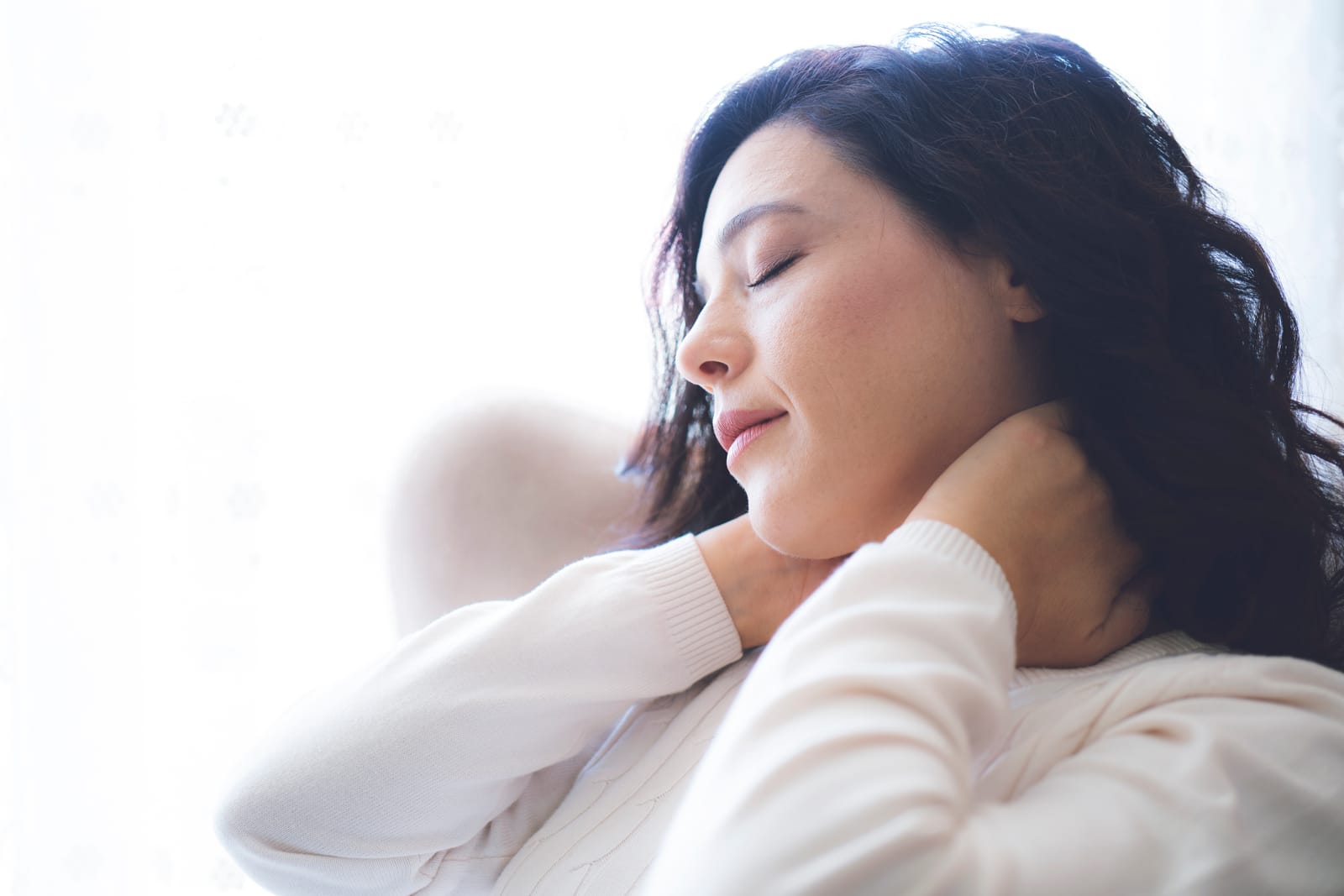
Stress is also a big factor. Many of us store stress in our shoulders, keeping them in a constantly raised position. Typically, we don’t notice we are raising and tightening our shoulders. One of the most important steps is to become aware of when your shoulders are tense. In fact, close your eyes now and see if you can relax and lower your shoulder. Once an hour, stop and check the level of your shoulders. Take a breath and drop them down. As you become more aware that you are raising your shoulders, you can learn to release the tension more often.
Posture of pain
Poor posture is the root of a lot of HeNeSho pain. Sitting can be particularly bad for the head, neck, and shoulder area. Nowadays, we spend more time with our heads bent over computer screens or worse, phones. This hunched posture is terrible for your neck and shoulders.
Breathing wrong
Improper breathing also adds to HeNeSho pain. The shoulders are not meant to be the primary breathing muscle. The main breathing muscle should be the diaphragm, which is under our lungs. When our diaphragm is weak, we train ourselves not to breathe with our diaphragm, and our shoulders bear too much load. Thin, flat bellies are so prized that we sometimes avoid breathing with the diaphragm, as it moves the belly in and out. The diaphragm is designed to be used all day. Shoulders are not intended to be used for breathing all day, and they fatigue and shift out of proper position, causing pain.
Other sources of pain
Accidents can cause neck injuries, and some diseases cause neck pain. Also, nerves in the neck can become pinched through misalignment or sudden awkward movements. These are less common causes of pain.
Treatments
Relax and breathe
Watch your posture. Sit comfortably. Don’t keep your head too far forward or bent over. Keep your shoulders down away from the ears. Breathe with your diaphragm. Put your hand just below your rib cage to feel your diaphragm moving.
Move
Exercise that encourages a wide range of motion can loosen and strengthen the shoulder muscles. Yoga, Pilates, and other simple full-body movements can help with HeNeSho pain by increasing strength, flexibility, and range of motion.
Massage gun use
A massage gun can help relax the shoulder and neck muscles. They are more powerful than vibrating massagers. It is much easier if someone helps you with the massage. It only takes 5—10 minutes of massage gun massage to loosen the muscles. They should only be used on muscles and never on bones, joints, or the head.
Massage gun tips
Professional massage guns can cost up to $500. Lower-cost versions are available, although they may not work as well. Things to look for in a massage gun, outside of build quality, are that it should have at least 12 mm of travel and a stall force of 35 lb or more. A decent massage gun will cost more than $100, but it might be a worthwhile investment if it can relieve your HeNeSho pain.
Keep your shoulders in mind
Almost all of us have HeNeSho pain at some point. Be aware of your posture and the stress you store in your shoulders. Like anything else, healthy habits pay off.