The Leg Brain Connection
You probably think brain health comes from crossword puzzles and Sudoku. But researchers just uncovered something startling: your leg muscles might be your brain’s most powerful defence.
A groundbreaking study of women aged 43 to 73 revealed an unexpected truth. Those with stronger legs had noticeably sharper minds over the course of a decade. Not a little sharper. The difference was staggering.
Your legs are the largest muscles in your body. And it turns out, they’re also speaking directly to your brain.
Why Your Legs Matter More Than You Realise
You might assume your brain works independently from your body. But it doesn’t. When you use your leg muscles, something happens inside your head.
Leg strength triggers a chemical cascade in your brain. It stimulates BDNF, a neurotrophic factor. Think of BDNF as fertilizer for your brain. It helps your brain cells grow, connect, and communicate more effectively. Without enough BDNF, your brain struggles to form memories and process information quickly.
Your legs also pump blood more efficiently toward your brain. Stronger leg muscles mean improved circulation throughout your entire body. More blood flow equals more oxygen and nutrients reaching your brain. It’s like upgrading your brain’s plumbing system, everything runs better.
The results are surprising. Leg strength is the strongest physical predictor of cognitive health over a decade. Not arm strength. Not core fitness. Your legs.
The Muscle-Mind Connection
How does leg power translate to brain power? When you exercise your legs, you’re not just burning calories. You’re activating biological pathways that support brain function.
Every time you do a squat or lunge, your leg muscles send signals to your nervous system. Your body responds by releasing growth factors. These factors travel throughout your brain, strengthening neural connections.
The study measured something called “leg power.” This means how quickly and forcefully your legs can push. Just 40 extra watts of leg power — roughly equivalent to climbing stairs a bit faster — predicted brain function three years younger.
Researchers now rank leg strength alongside genetics and education as the strongest predictors of brain health. Your legs matter. The best part? You can improve leg strength at any age.
You’re Not Locked Into Decline
You don’t need to become a bodybuilder. You don’t need expensive equipment or hours in a gym. The research specifically highlights exercises that work for your age and ability level.
If you’re 45+, your legs are ready to work harder. Your body is capable of significant improvements. Studies show that even small increases in leg strength produce measurable benefits for brain health.
Two Exercises To Protect Your Brain
Three specific movements are especially protective for your brain health. These aren’t complicated. They’re classics because they work.
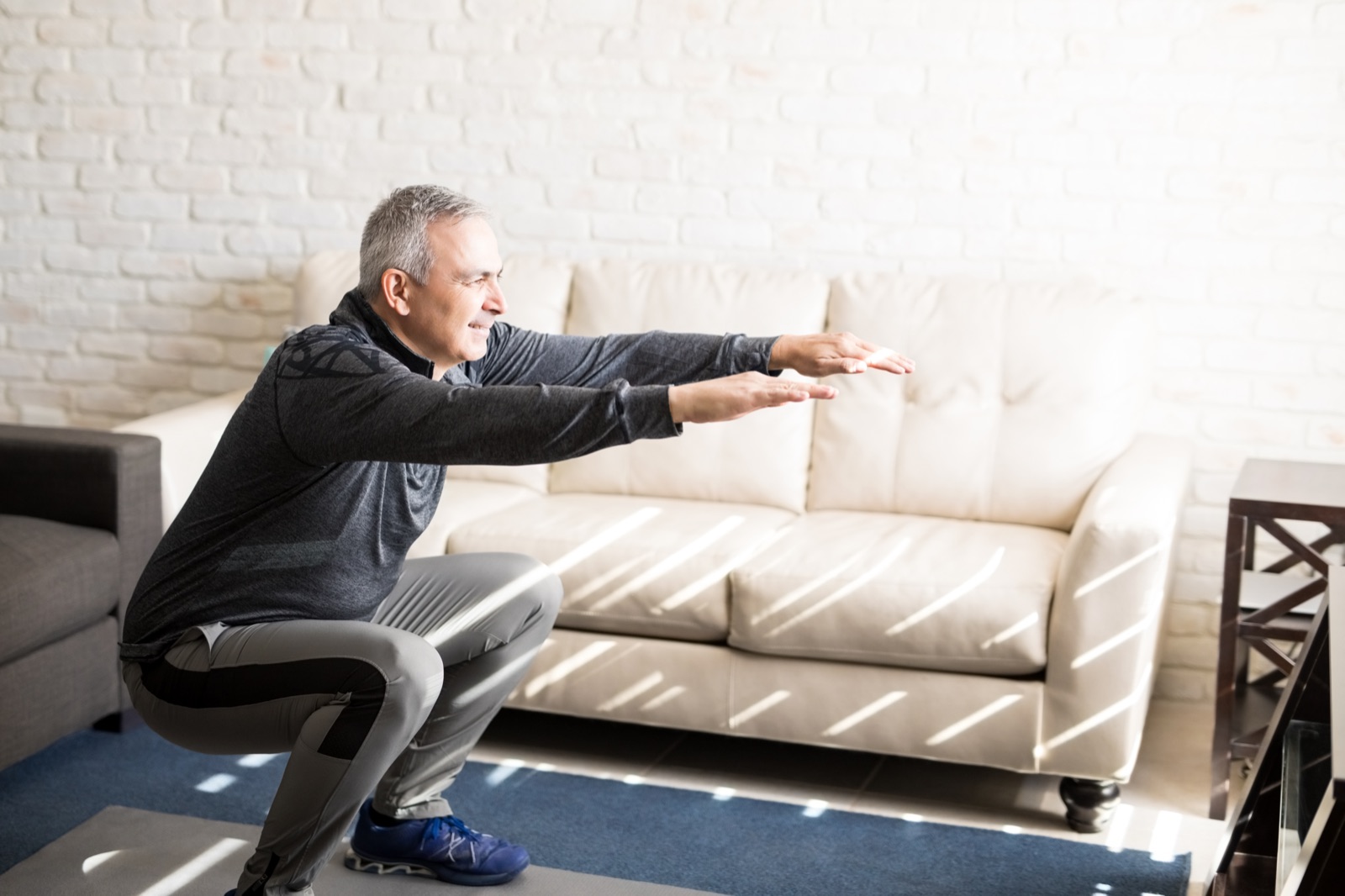
Squats engage your largest leg muscles simultaneously. They build strength, balance, and power. Start with bodyweight squats if you’re new to exercise. Lower yourself as if sitting into a chair, then stand back up. Do this slowly and deliberately. Even 10 repetitions twice weekly begin building cognitive benefits.
Lunges challenge each leg individually. They improve stability and address muscle imbalances. Step forward, lower your back knee toward the ground, then push back to standing. Alternate legs. This movement mimics real-life activities like climbing stairs and walking on uneven terrain.
Starting Your Brain-Boosting Routine
If you haven’t exercised in months or years, begin gently. Your body responds better to patience than aggression. Consistency beats intensity at this stage.
Start with two sessions per week, spaced two days apart. This gives your muscles recovery time — when actual growth happens. Each session needs only 15 minutes. Focus on good form.
Perform 12 repetitions of your chosen exercise. Rest for one minute between sets. Aim for two to three sets. After 4 weeks, you should see improvements.
How Quickly Will You See Brain Benefits?
You won’t notice cognitive improvements immediately. Your brain changes gradually. But people who maintain stronger legs show sharper minds within months. The study tracked changes over a decade. Within that timeframe, cognitive differences became dramatic. Brain-protective effects appear after around 12 weeks of consistent leg training.
Age Is Not Your Limitation
You might assume your age (45+) makes this harder. It doesn’t. Studies confirm that people in their 60s, 70s, and beyond build significant strength through consistent exercise. Your body hasn’t forgotten how to adapt. It’s simply been waiting for the stimulus. Leg training provides that stimulus. Your muscles respond. Your brain responds.
Safety is important. If you have joint concerns or health conditions, consult your healthcare provider before starting.
Your Brain’s Future Starts With Your Legs
Your leg muscles speak directly to your brain. Stronger legs mean sharper thinking, better memory, and more resilient cognition as you age. The next decade of your cognitive life begins today. Will you prioritise brain health through leg strength? Start this week. Choose one exercise. Commit to stronger legs for better thinking.